Why Giving Consequences Feels So Hard (And What to Do Instead)
Why Giving Consequences Feels So Hard
(And What to Do Instead)
“Why is this so hard?”
If you’ve ever tried to discipline your child and ended up more stressed than they were… you’re not alone.
I’ve been that parent too.
And here’s the truth most people don’t say:
A lot of parents aren’t avoiding consequences… they’re overwhelmed by how to do it the “right” way.
Let’s talk about what’s really going on—and how to fix it.
The Biggest Mistake Parents Make with Consequences
Many parents give consequences that actually punish themselves.
You create something that:
Takes constant monitoring
Requires you to keep repeating yourself
Leaves you exhausted
And then what happens?
You can’t stay consistent. And without consistency… the consequence doesn’t work.
👉 The goal is simple:
Make consequences easy for YOU to follow through on.
Stop Building a System That Works Against You
Let’s talk about a common example…
You tell your child to go to their room.
But in their room they have:
A TV
A game system
A phone
Now what?
You’re constantly saying:
“Turn that off.”
“Get off that.”
“Stop playing.”
Now YOU are working harder than your child.
That’s not discipline—that’s burnout.
👉 Fix it:
Keep devices in shared spaces.
Let kids earn access instead of having it all day.
Simple Consequences That Actually Work
You don’t need complicated systems.
Here are a few that build real self-control:
1. Have Them Sit
Yes—just sit.
“Sit here until I call you.”
Or set a timer.
This teaches:
Patience
Focus
Self-control
And over time?
They start thinking before making the same choice again.
2. Use Time as a Consequence
If your child is wasting time…
Don’t chase them.
Instead say:
“You can take your time now. But we’ll take that time off your game time later.”
Then walk away.
Now they have to think:
“Is this worth it?”
👉 This builds accountability, not resistance.

3. Say It Once… Then Be Done
One of the biggest mistakes?
Talking too much after giving a consequence.
Explaining.
Arguing.
Going back and forth.
That’s where things escalate.
👉 Instead:
Say the consequence
Stay calm
Walk away
Let the consequence do the teaching.
Let Go of the Guilt
Your child is not supposed to like consequences.
They may:
Cry
Get upset
Complain
That doesn’t mean you’re doing something wrong.
It means they’re learning.
👉 Discipline is not about making your child comfortable.
It’s about helping them grow.
We Have to Stop Micromanaging
Your child is capable.
They show you this every time they:
Get ready quickly for something they want
Focus when it benefits them
So the goal isn’t to force them…
👉 It’s to help them learn to manage themselves.
Final Thought
Your child needs discipline just like they need food, rest, and support.
But discipline should not drain you.
✔ Keep it simple
✔ Make it consistent
✔ Make it sustainable
Because when it works for you…
It works for your child.
💬 If this spoke to you, you’re not alone.
And if you want support building systems that actually work in your home, I’m here to help.
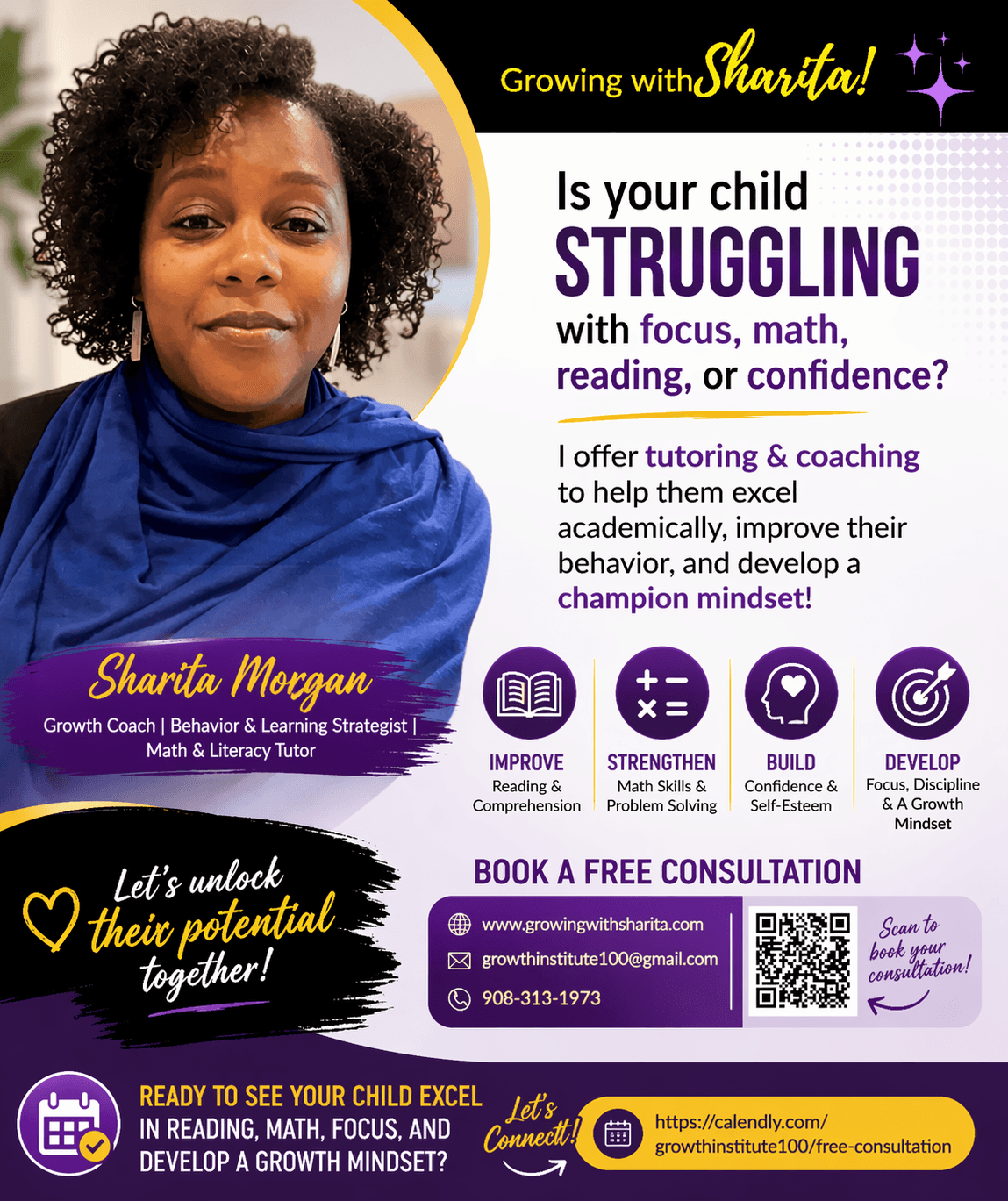

Hey y'all! 🙌🏿
Hi, I'm Sharita Morgan!
With 20 years of experience as a mental health specialist, special education teacher, and mom, I've learned that there is a direct link between behavior challenges in the classroom and illiteracy.
That's why I combine behavior and literacy coaching to help kids make better choices, take responsibility, and improve academically.


JOIN MY MAILING LIST

The only coaching program for kids that offers you Behavior, Math, and Literacy coaching to get you real results in the classroom and in life! Also offering classroom management services.
+1 908-313-1973
Follow us

Newsletter
Subscribe now to get daily updates.